
Story Breakdown: Ghostroots
Why Pemi Aguda's Ghostroots still lives rent-free in my head

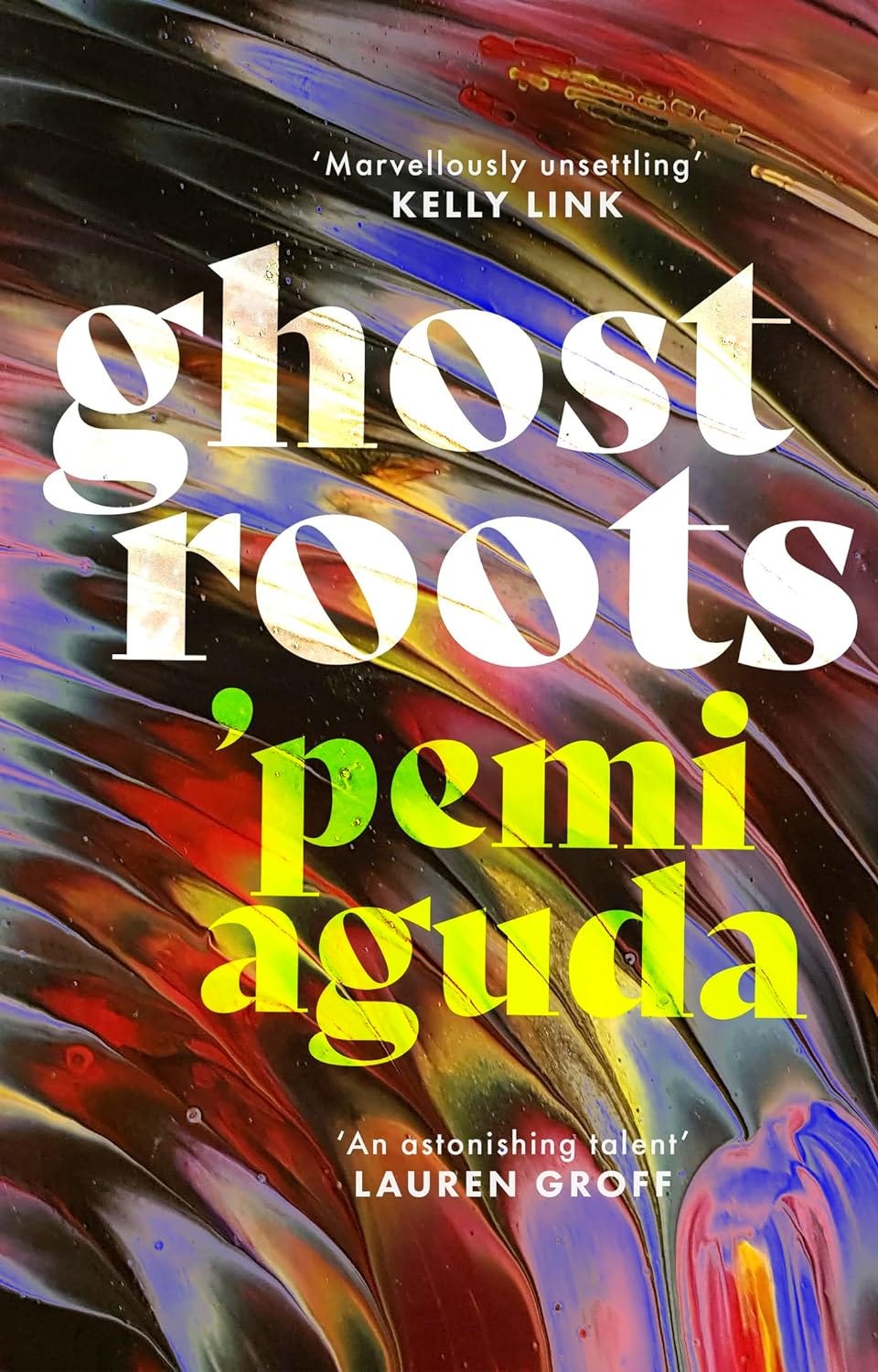
Before we dive in, I want to say a massive thank you to everyone who reads and enjoys this section of my newsletter. It’s one of my favourite posts to write. I didn’t realize you would enjoy reading it as much as I enjoy writing it :) Until a reader told me it’s one of the sections she often looks forward to. Massive shoutout to Kenny and all the anonymous readers (i see the stats. haha). You indulge the nerdy part of me who loves to yap and analyse literature, movies, music and books. either good or bad.
so cheers to more analysis. xx!
Pemi Aguda is whoever she thinks she is. Because what?!
I had to start there. I need to put that on the record before anything else, because nothing I write in this breakdown will fully capture what it felt like to read Ghostroots for the first time, to sit down with what I thought was a short story collection and realise, somewhere around the third or fourth story, that I would not be able to put it down. Not only is she skilled with words, but she’s also a good storyteller.
Years ago, I realized that it’s one thing to be a good writer; it’s another thing to be a good storyteller. She does both excellently.
So last year, when I was preparing my story for the Commonwealth Short Story Prize and a couple of other submissions, I did what any serious writer does when they want to understand what excellent short fiction looks like. I went looking for examples. I cannot remember exactly how I found her, but I think I read the Birdwoman story in an online literary publication. Her story was shortlisted for the 2024 Caine Prize for African Writing and won an O. Henry Prize in 2022. After reading Birdwoman, I did what a normal reader/writer does when a writer’s mind completely fascinates them. I went and stalked her and the rest of her stories and binged all 12 stories in Ghostroots.
Now, a fair warning before we go any further: Pemi Aguda writes speculative horror. If that is not your genre, tread carefully or feel free to give this one a pass. Honestly, I did not know reading speculative horror was my thing until I finished this book. So perhaps don’t decide too quickly.
Welcome back to another episode of Story Breakdown. We’re bi-weekly, we’re here, and today we’re doing something a little different. This is not a single novel or film. Ghostroots is a collection of twelve short stories, so this breakdown will work a little differently, too. Instead of analysing one narrative arc, we’re going to pull out the craft threads that run through the entire collection and examine what makes Pemi Aguda’s storytelling so devastatingly effective.
For the sake of this newsletter, I’ll focus on just three of the twelve stories. If you’ve read Ghostroots or will do so in the future, feel free to use this as a guide or share your thoughts in the comment section below when you get the chance.
1. The Supernatural was Never the Point
In Birdwoman, the speculative element isn’t there for spectacle but because some griefs are too large for ordinary language and because there are losses that realism simply cannot hold. Pemi Aguda reaches for the fantastical the way a poet reaches for a metaphor: to get closer to it than straightforward prose would allow.
The same thread runs through Breastmilk. A woman’s detachment from her newborn is already one of the most isolating, least-spoken-about experiences in motherhood. Pemi doesn’t explain it or resolve it neatly. She renders it strange, visceral, and completely honest in a way that makes the reader feel the distance between that mother and her child as a physical thing.
The lesson: When your story carries an emotion too large or too taboo for realism, consider turning to the speculative. I did this for my longlisted Commonwealth story, Nobody. The supernatural, used well, doesn’t distract from emotional truth but amplifies it. Ask yourself: what would it look like if this feeling became literal? That question is often where the most powerful writing lives.
2. Her Endings Are Haunting
Birdwoman ends tragically. And yet it still lives rent-free in my head. Pemi Aguda understands something that many writers are afraid to trust: a sad ending, handled with enough care and earned with enough truth, does not leave the reader feeling cheated. She doesn’t soften the landing or reach for a silver lining that the story hasn’t earned. She lets the tragedy be what it is, and in doing so, she gives it a weight and a dignity that a tidy resolution would have stolen from it.
The lesson: Happy endings are not inherently more satisfying than devastating ones. What matters is whether the ending is true to the story you’ve told. If you’ve built your world honestly and your characters feel real, your reader will follow you into grief and they will thank you for not flinching.
Don’t rescue your story from its own truth.
3. She Writes About Power Without Ever Announcing It
Girle is, on the surface, the story of a mistreated maid and the woman who takes her away. But underneath it is a story about power, who has it, who pretends to offer it, and what it actually costs to give someone their freedom when the world around them hasn’t changed. The horror in that story isn’t the kidnapping but question the story leaves unanswered: was the second woman really any different?
