

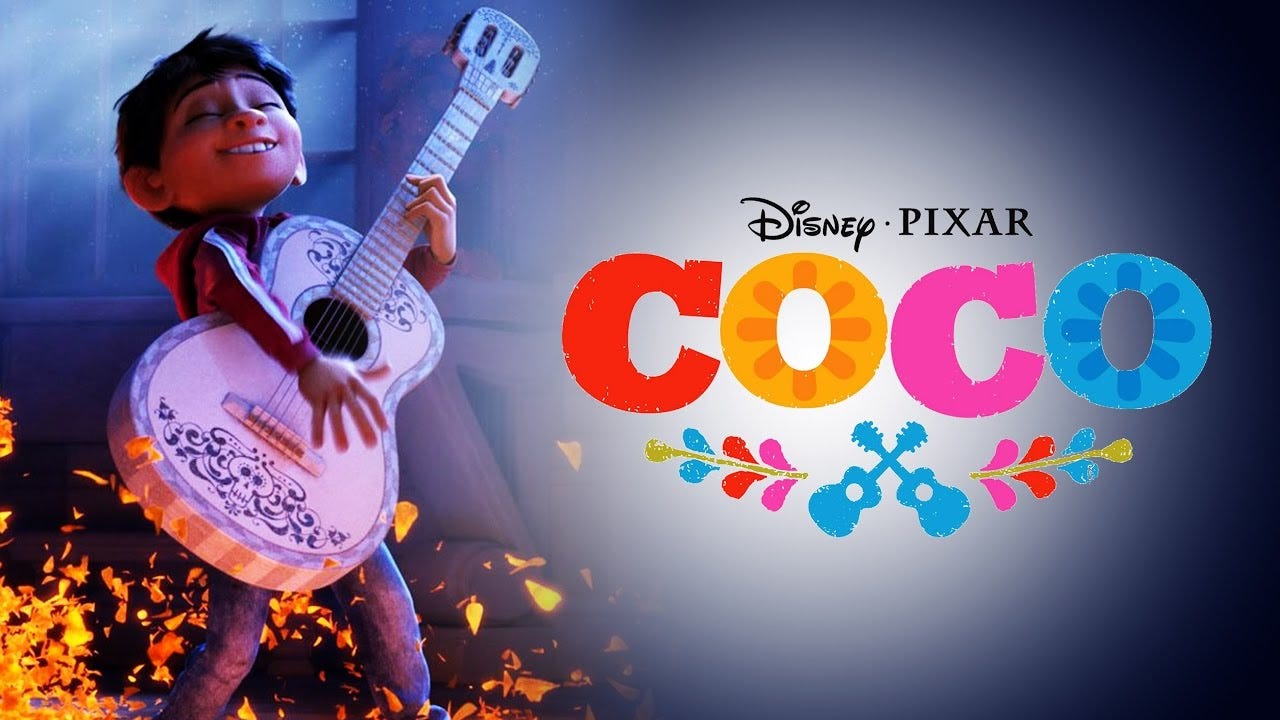
Nobody warned me that Coco would do what it did. I sat down expecting colour, music, and a talking dog. I did not expect to leave rearranged.
I remember watching it for the first time and thinking — wait, this is a children’s movie? Because nothing about the way it dismantled me felt age-appropriate. By the time the credits rolled, I was somewhere between deeply moved and mildly annoyed that Pixar had done it to me again. I can’t believe I cried watching this. Yep. It was that good.
Welcome back to another episode of Story Breakdown. We’re bi-weekly, we’re here, and today I’m diving into Coco, a film that hides one of the most profound meditations on legacy, family, and what it means to be truly remembered inside a story technically designed for children.
Here’s what makes it fascinating, though. Most family films are built on a simple engine — a dream, an obstacle, a resolution. Coco has all of that on the surface. But underneath, it’s asking something far more unsettling: what happens to the people we forget? And it answers that question in a way that will stay with you long after the screen goes dark.
That’s what we’re unpacking today.
Let’s get into it.
1. 🎭 The Conflict is Immediately Personal
Miguel doesn’t want to fight a villain. He wants to play music, and his entire family has banned it for generations. That’s it. That’s the conflict. And yet from the very first scene you are completely invested.
The lesson: The most universal conflicts are the smallest ones. A boy who wants to play guitar and a family who says no is more gripping than saving the world — because we’ve all been told no by someone we love.
2. 💀 The World Has Rules and Earns Every One of Them
The Land of the Dead is vivid, specific, and internally logical. You can only cross over if someone in the living world remembers you. If they forget you, you disappear forever. Pixar built an entire mythology and made you understand it in minutes.
The lesson: Your fictional world (even if it’s realistic) needs rules. Rules create stakes. Stakes create tension. And tension is what keeps readers turning pages at 2 AM.
